
The production ledger for AI filmmakers. Free, on the Higgsfield marketplace.
A serious AI film is a hundred shots that all have to belong to the same picture. The models will generate the shots; nothing keeps the picture. On my first film, the production ledger— the document a script supervisor keeps on any real set — lived across chat scrollback, a storyboarding site, a notes file, and a platform history panel. I was the ledger. Scenester is what I built so nobody has to be the ledger again.
What it does
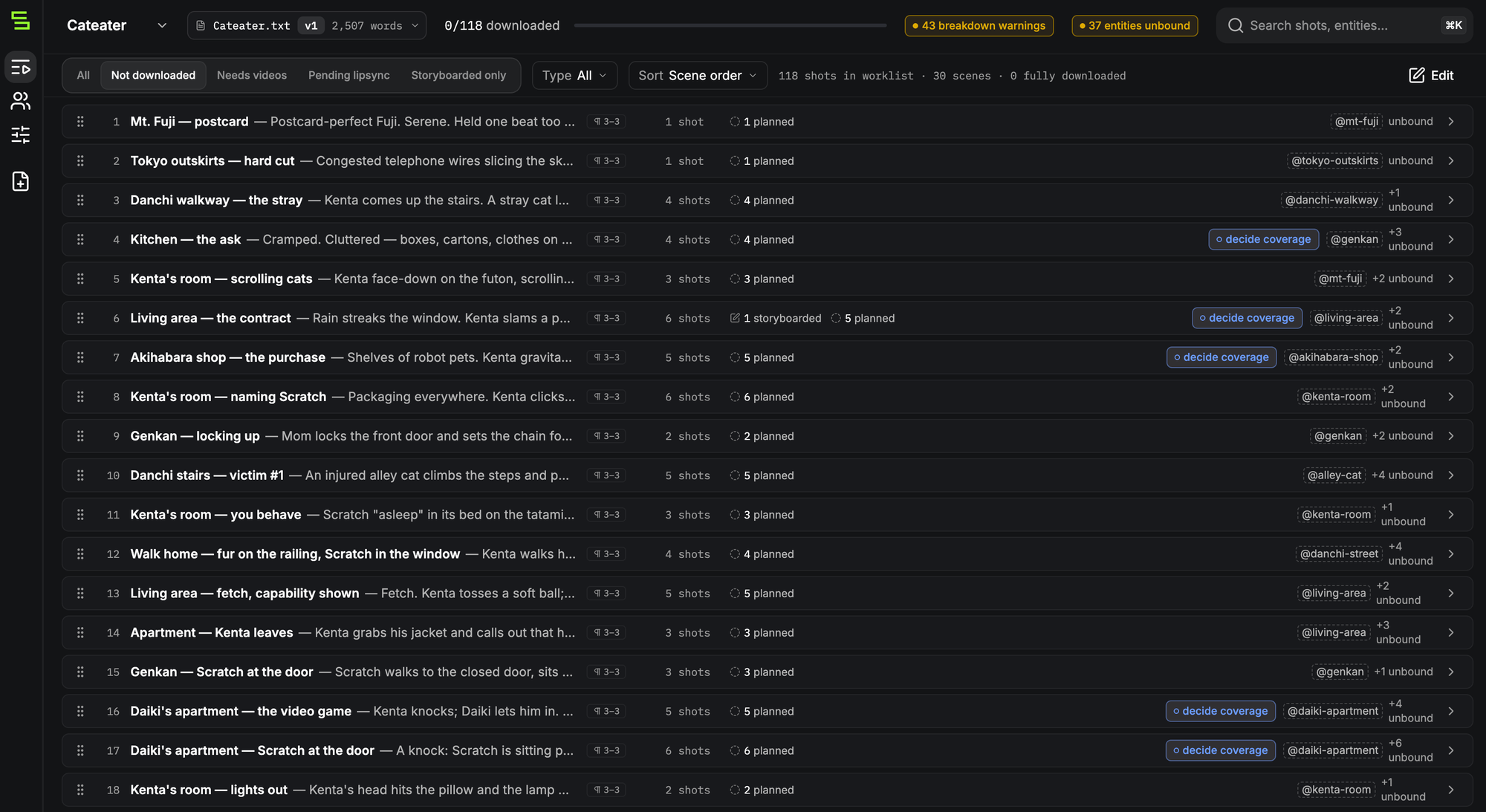
Paste a script, get a breakdown. Scenester reads your script — screenplay, prose, an outline, a messy draft — and proposes scenes, shots, and a cast list, with every line traceable back to the exact text it came from. The breakdown is a proposal: you split, merge, reorder, and delete, and your edits are never overwritten by a machine.
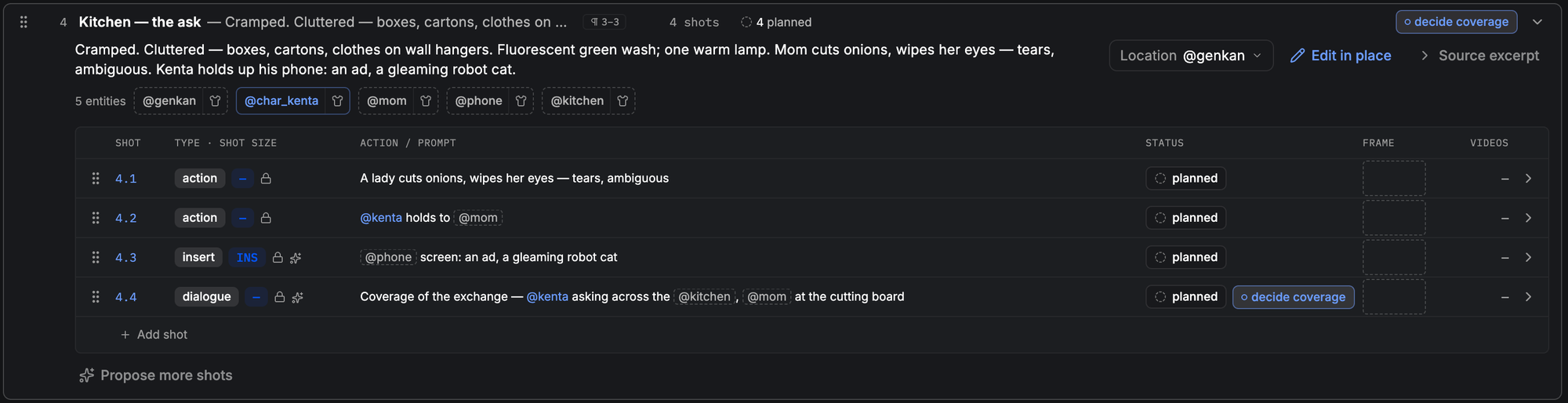
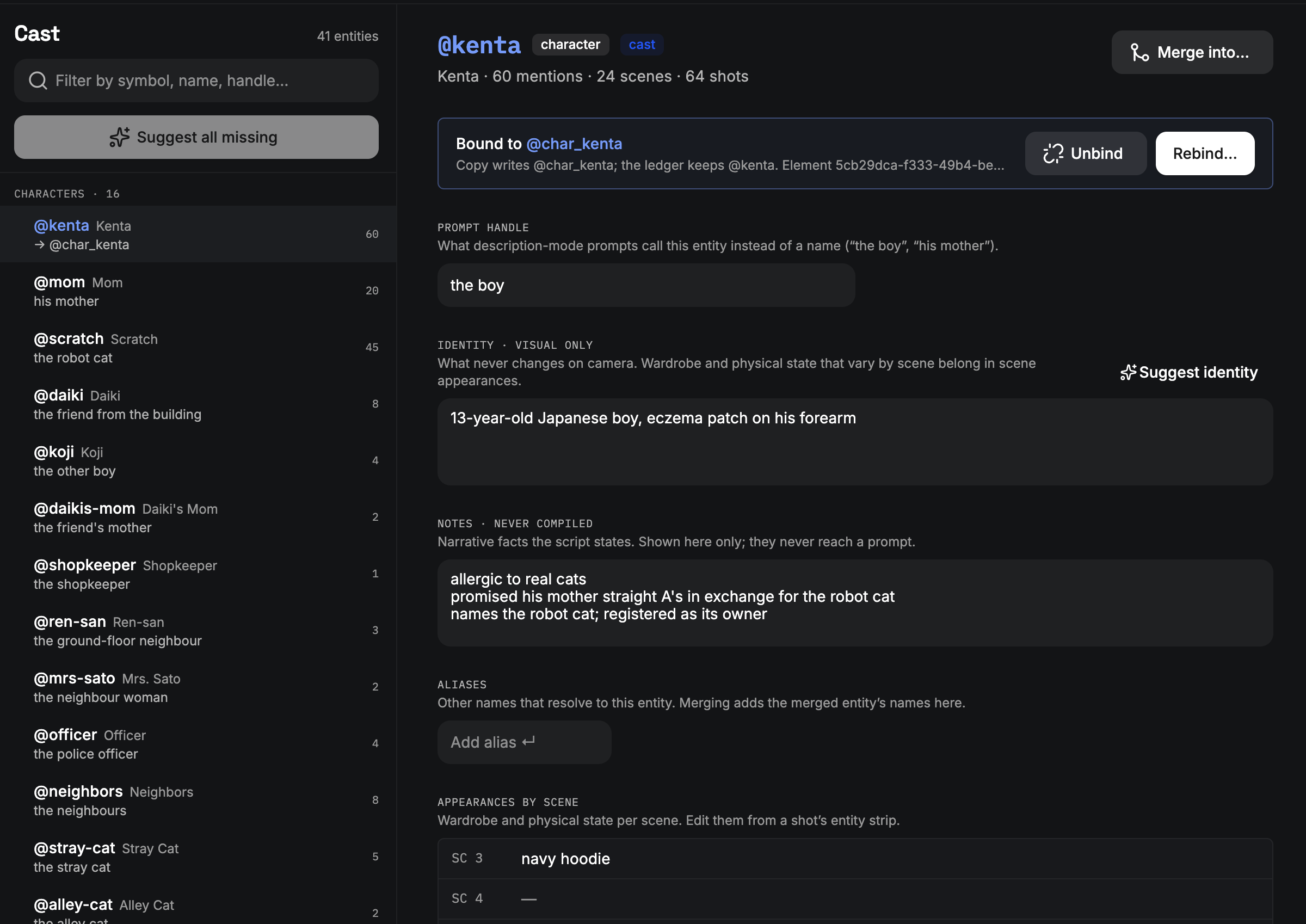
Cast your picture. Every character, location, and prop the script mentions becomes an entity. Describe them once, globally — or bind them to your Higgsfield Elements, so @kenta (or whatever specific name you are using) stops being "a boy" and becomes the same boy, in every frame, across every shot. Casting is never a gate: boards run on descriptions before anyone is cast.
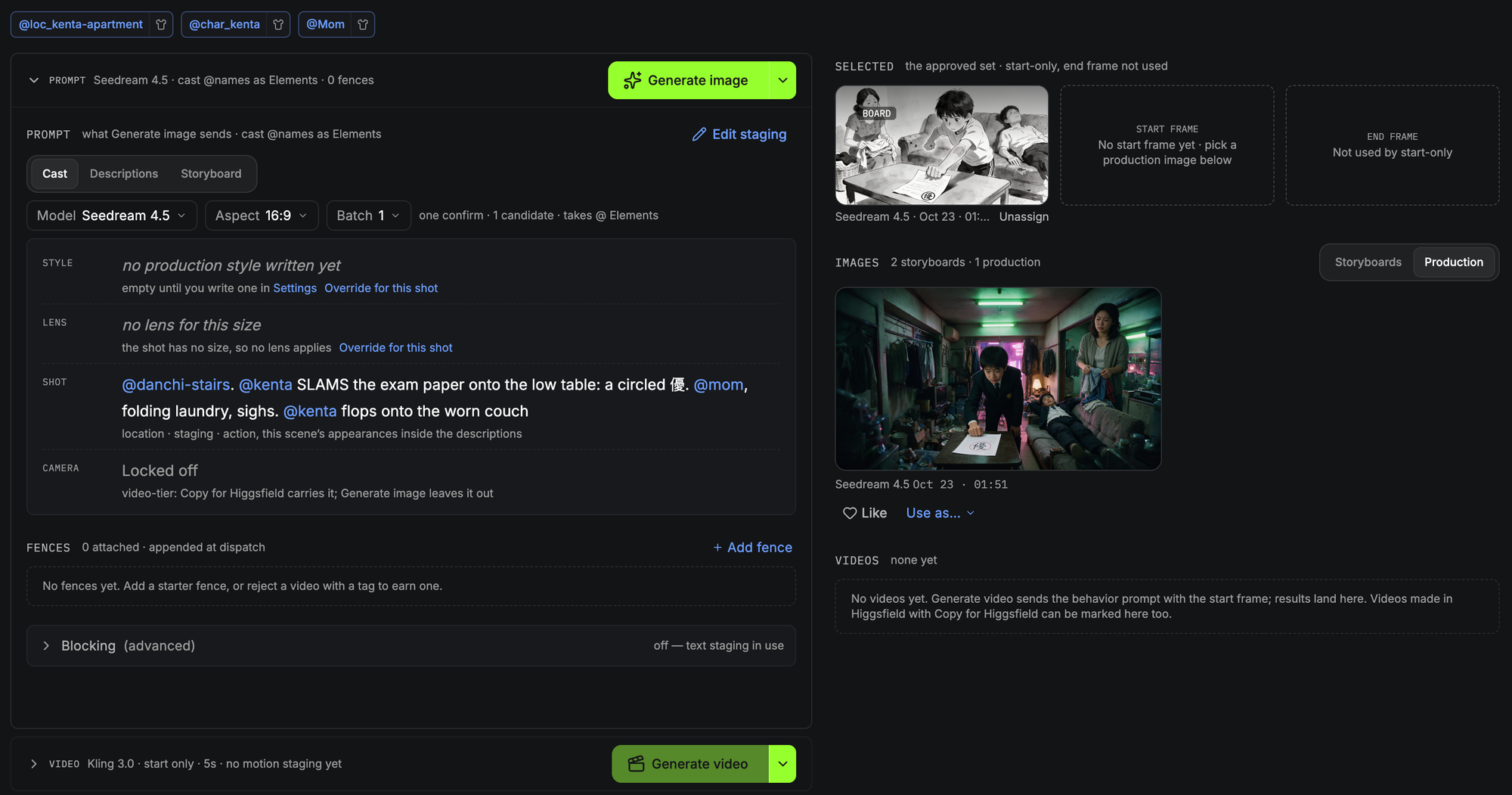
Generate inside the tool. Storyboards, keyframes, and video dispatch on the models you already use — grouped by which ones take Elements — billed to your own Higgsfield credits, exactly like generating anywhere else on the platform. Every generation lands in its shot, permanently: nothing is ever orphaned, and nothing is ever lost.
Watch the film assemble. Statuses aren't checkboxes — they derive from what actually exists. A shot is storyboarded when its board exists, keyframed when its frame is chosen, delivered when its clip goes to editorial. The ledger answers the only question that matters at 1am: what's actually done?
The constitution
Scenester is built on one law, learned the hard way: invent nothing.
- The parser proposes nothing your script doesn't say.
- The compiler adds nothing you didn't stage.
- A description is never embellished; a quote is never rewritten.
- Human edits always win. Machine output is always a proposal.
The reasoning behind that law — and the rest of the grammar it belongs to — is in The Laws of AI Filmmaking, the essay this tool fell out of.
Practical notes
- Free. No account beyond your Higgsfield sign-in, no subscription.
- Your credits. Script breakdown and generation run on your own Higgsfield credits (a breakdown is roughly 5 credits for a short-film script; the model that did the work is always shown).
- Your data. Projects are private to your account. Export the whole project as JSON anytime.